
How Sainte Anne Marine National Park history shaped the islands
Sainte Anne Marine National Park history begins long before the protected area was established in March 1973. Sainte Anne hosted the first French settlement in 1770, and during the Second World War a Royal Marines base helped protect Victoria. The wooded islands seen from the water have therefore served very different purposes, from settlement and military defence to the conservation of marine habitats.
The park brings together Sainte Anne, Cerf, Moyenne, Round, Long and Cachée near Mahé. Their shared protected setting does not give them identical access arrangements. Private land, accommodation and nature protection all affect where visitors can go ashore. A boat journey is a useful way to see this island landscape without treating every shoreline as a public landing place.
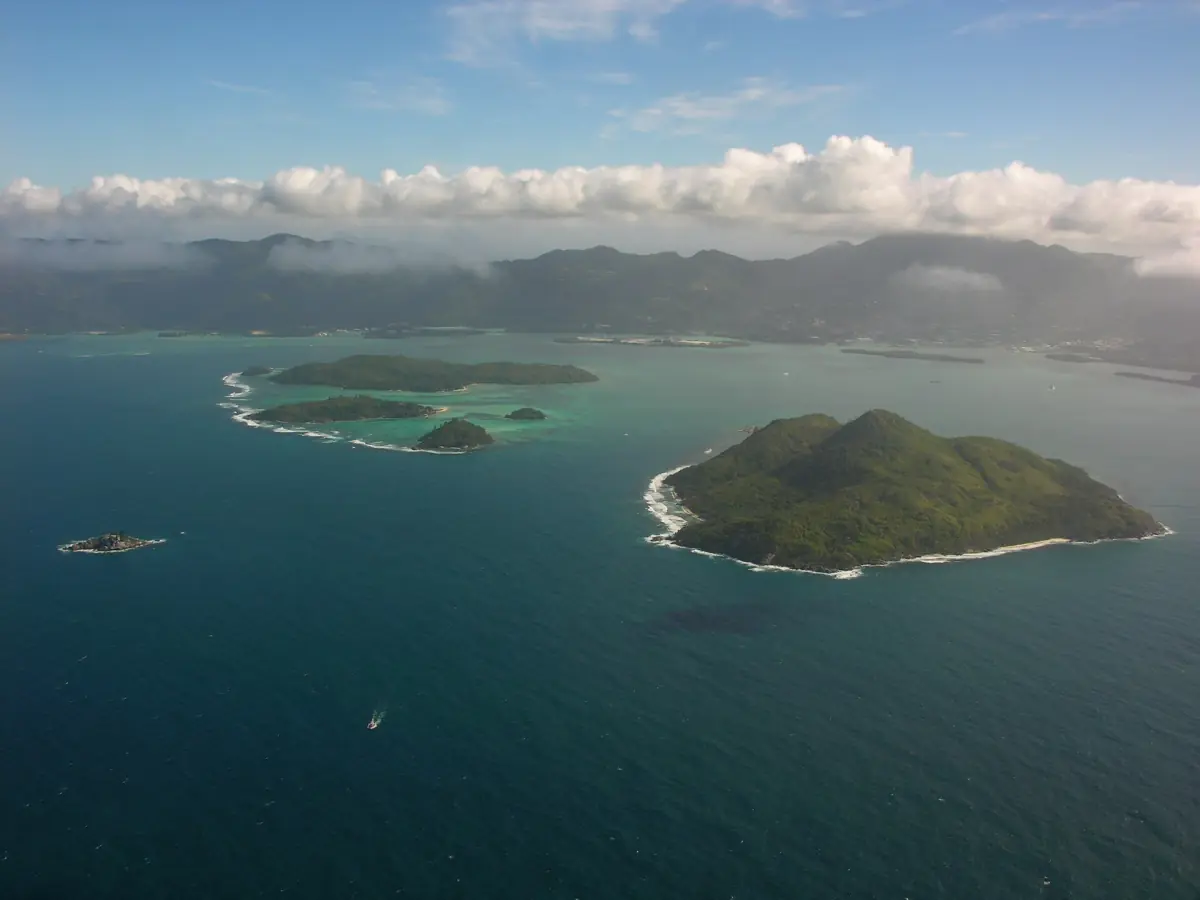
Island history before marine protection
The older management plan, covering 2021 to 2025, records whaling and a later state boarding school on Sainte Anne. It also describes a former prison on Long and a leprosy station on Round. These belong to the islands' historical record; they should be read as earlier uses rather than a programme of present-day heritage visits.
The military base on Sainte Anne adds another layer to that history. Its purpose during the Second World War was the protection of Victoria. For a visitor today, separating those past roles from modern island access helps keep expectations realistic: seeing an island from the sea and entering a historic site are different experiences.
See the protected waters
A clear-boat trip offers a way to visit the protected waters discussed here, with park entry included.
Hand-picked tours, booked through GetYourGuide. Prices are indicative starting prices in US dollars (as of October 2026). Tap a tour for live availability and the current price in your currency.


Images – Clear-boat trip with park entry: Ein Strand auf der Insel Île au Cerf – Cropped from a photo by Kusafiri – CC BY-SA 3.0

See the marine park by transparent boat
A two-hour swimming outing includes park entry, an English- and French-speaking guide and bottled water. A sandbank stop depends on time and weather.
From national park designation to today's management
The Seychelles Parks and Gardens Authority, or SPGA, manages the marine park today. Its park account describes Sainte Anne as the first marine national park in the Indian Ocean. The March 1973 designation is the central milestone in its conservation history, shifting the focus of this island setting towards the protection of marine life and habitats.
That protection extends beyond the beaches visible on a boat trip. Seagrass meadows and coral reefs form part of the park's habitats, and green turtles are among its marine life. Cachée is an uninhabited nature reserve and a nesting place for noddies. Its conservation role is a reason to respect access arrangements rather than plan an independent landing.
For the practical side of visiting, the marine park tour guide explains boat choices and fees. Park admission and permission to land on an island are separate matters. Cerf also contains private property, so a visit should follow the access arranged for the chosen excursion.
Coral restoration and turtle monitoring in 2026
Conservation remains active work. In a report published on 7 July 2026, SPGA described the placement of 1,207 coral fragments on reused fish-trap structures on 4 July. The work targeted degraded reef areas. It is a concrete restoration milestone, rather than a reason to expect uniformly healthy coral throughout the park.
On 27 August 2026, SPGA reported additional AI cameras on Sainte Anne and Moyenne to monitor turtles and illegal activities. This followed the habitat restoration and hawksbill turtle protection cooperation announced with the university and IBC on 26 April 2025. Together, the projects show how habitat work and monitoring now sit alongside the park's original designation.
Visitors can support that purpose through simple behaviour: leave shells, corals and organisms in place, take rubbish away and avoid touching coral. The older 2021 to 2025 management plan specifically advised against standing on coral. For the water activity itself, read the snorkelling and marine life guide; wildlife encounters and underwater visibility vary.
Moyenne within the marine park
Moyenne has its own terrestrial national park within the marine park. Its island story deserves a separate visit context, with access and landing arrangements considered alongside the boat trip. Stories linking graves there to pirates remain legends, not established history. For the island visit and its walking route, use the Moyenne Island guide.
Visiting the landscape today
The transparent boat outing offered here is a swimming and sightseeing visit. It lasts two hours and includes marine park entry, a guide speaking English and French, and one bottle of water per person. It starts at Eden House on Eden Island; hotel pickup and drop-off are excluded. Its focus is experiencing the park from the water rather than a guided history itinerary.
A sandbank stop is optional when time and weather permit. Boat trips, crossings and stops depend on weather, so leave flexibility in the day. The boat access guide helps with the journey to the departure point, while the weather and season guide explains why a dry month can still bring a rougher sea.
Questions about the park's history
When was Sainte Anne Marine National Park established?
The marine national park was established in March 1973. Sainte Anne's settlement history reaches back to the first French settlement in 1770.
Who manages the park today?
The Seychelles Parks and Gardens Authority, abbreviated SPGA, is the current management authority. Its recent work includes coral restoration and turtle monitoring.
Does the transparent boat trip include a history tour?
The two-hour outing focuses on swimming and seeing the marine park. It includes park entry and an English- and French-speaking guide; plan it as a water-based visit.
Can a park ticket be used to land on every island?
Island access has its own arrangements. Follow the landings included in the chosen trip and respect private property and protected areas.