
Choosing the best time to visit Sainte Anne Marine National Park
The best time to visit Sainte Anne Marine National Park is not simply the month with the least rain. For a boat and snorkeling day, wind and sea state matter alongside rainfall. The Seychelles Meteorological Authority describes weaker winds in April and around the October to November transition. We use that seasonal pattern as an editorial starting point for planning short water-based outings, rather than a promise of clear water.
July and August are relatively dry in the older Mahé climate averages, but the southeast trade winds can bring rougher seas. Choosing the lowest rainfall number therefore answers a different question from choosing the most suitable conditions for a crossing. Decide which activity matters most, leave room to change the day and use the current marine forecast when you are on Mahé.
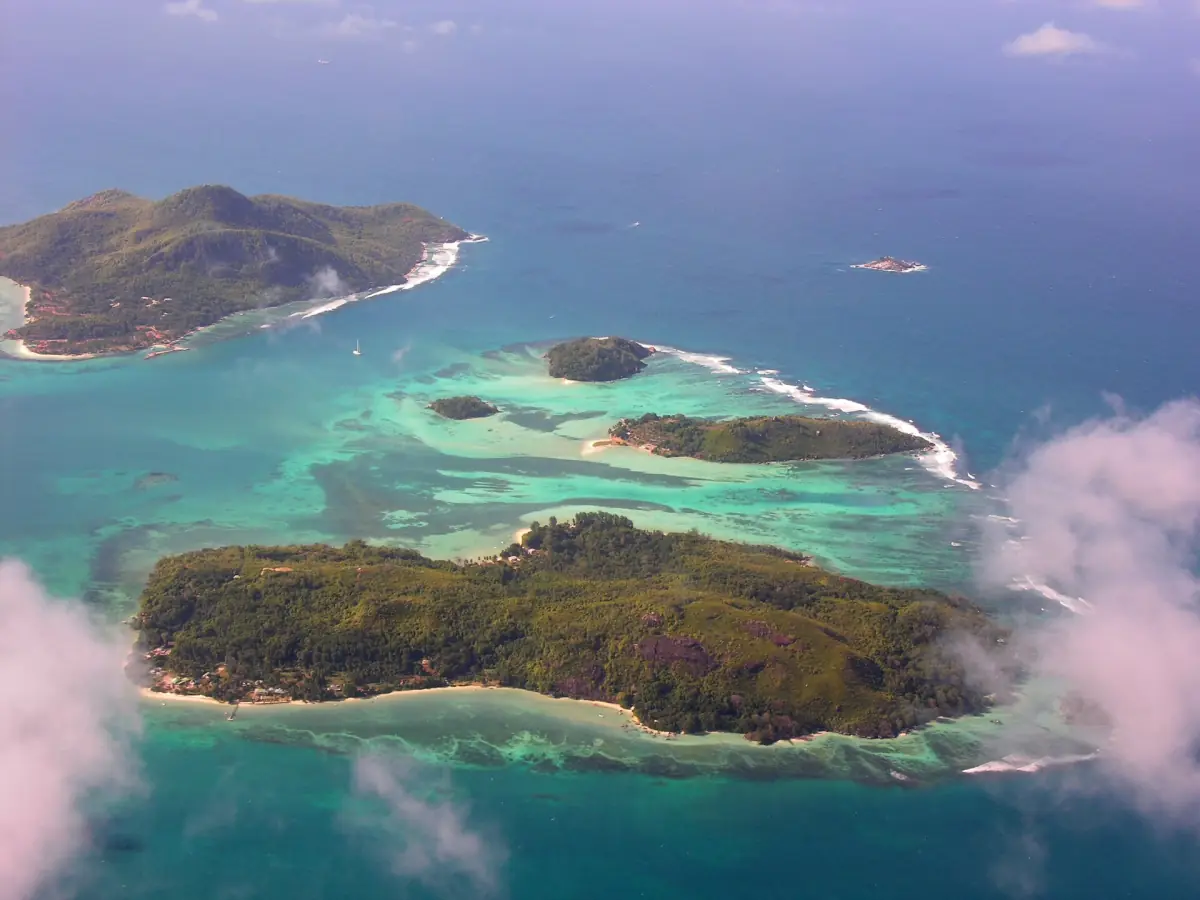
Trade winds and sea conditions
The northwest monsoon brings a wetter period around the turn of the year. The southeast trades strengthen toward the middle of the year, with July and August associated with wind and rougher seas. Winds then ease through the seasonal transition. Use these broad patterns alongside current marine information when planning a particular boat route, rather than relying on a beach photograph or a dry forecast on land.
Boat trips, crossings and stops depend on the weather. That applies to snorkeling, sandbanks and the requested kayak activity in the featured excursion. Choose the outing for its actual combination of activities, then let the day's operating arrangements determine the route. Our snorkeling guide covers the in-water experience and reef care in more detail.
A Cerf and snorkeling day
This boat trip combines snorkeling and a Cerf barbecue; check conditions and availability for your date.
Hand-picked tours, booked through GetYourGuide. Prices are indicative starting prices in US dollars (as of October 2026). Tap a tour for live availability and the current price in your currency.


Images – Cerf barbecue and snorkeling trip: Cropped from a photo by Kevin Gepford – CC BY-SA 4.0

A weather-dependent park day with snorkeling
The Cerf outing combines snorkeling equipment and a barbecue lunch; crystal kayaking is on request with a disclaimer. Northern Mahé pickup is included, while the park fee is extra.
April and October to November: a planning judgment
April's weaker, variable winds make it worth considering if your priority is a short crossing or time looking into the water. It can also be hot: the meteorological service describes daytime highs above 32°C in April. Plan for heat as well as the sea, rather than treating a relatively favourable wind pattern as the only part of the day that matters.
October brings weaker winds, while November becomes warmer and wetter with often more pleasant sea conditions. Our preference for this transition is an interpretation of that seasonal guide, not an official visibility window. A flexible travel plan can make more use of it than a single fixed boat date. For choosing between a window-viewing ride and entering the sea, read about the semi-submarine and glass-bottom boat formats.
Monthly climate values for Victoria and Mahé
The table uses the explicitly older 1981 to 2010 normal period supplied by the Seychelles Meteorological Authority through WMO's World Weather Information Service. It describes Victoria/Mahé, not measurements on a park island. Maximum and minimum temperatures are mean daily values; rainfall is a mean monthly total. These averages are neither a forecast for your trip nor a measure of underwater visibility.
| Month | Mean daily max °C | Mean daily min °C | Rainfall mm |
|---|---|---|---|
| January | 30.0 | 24.5 | 403.7 |
| February | 30.6 | 25.2 | 249.2 |
| March | 31.2 | 25.3 | 201.9 |
| April | 31.6 | 25.4 | 184.6 |
| May | 30.7 | 25.6 | 161.2 |
| June | 29.2 | 24.8 | 115.6 |
| July | 28.5 | 24.2 | 89.1 |
| August | 28.6 | 24.2 | 122.5 |
| September | 29.2 | 24.6 | 163.0 |
| October | 30.0 | 24.7 | 177.7 |
| November | 30.3 | 24.4 | 192.5 |
| December | 30.3 | 24.4 | 305.9 |
Read the rain column as background for choosing a season. It does not say how many usable boat hours your particular day will contain. The dry-season wind pattern remains relevant even where the monthly rainfall total is relatively low. For Cerf Island outings, the balance between time on the beach and time on the water also affects what you want from the day.
Daily weather and a plan for changes
Read current marine information from the Seychelles Meteorological Authority shortly before the excursion. Keep the operator's message channel available for changes to boarding or stops. Put a boat day early enough in your stay to leave another possible day, and avoid a tight onward connection after the scheduled return. The access guide covers departure bases and land transfers.
For the featured outing, northern Mahé pickup, snorkeling equipment and a Cerf barbecue lunch are included. Crystal kayaking is requested in advance and involves a disclaimer; the park fee is separate. Its one-day validity should not be read as a twenty-four-hour sailing duration. Choose this combination for its activities while accepting that sea conditions can alter the day's programme.
Questions about seasons
Are the driest months also the calmest?
Not necessarily. July and August are relatively dry but can have stronger southeast trade winds and rougher seas.
Will April guarantee snorkeling visibility?
No. The weaker seasonal winds are a planning consideration; actual visibility and sea conditions vary on the day.
Are these current park measurements?
No. The monthly table is for Victoria/Mahé and uses the older 1981 to 2010 climate normal period.